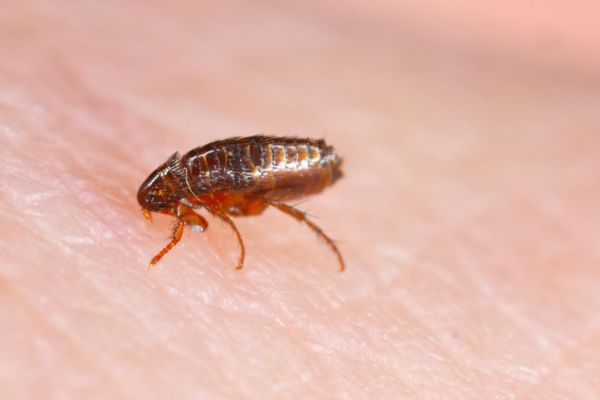

Mosquitoes
How to identify a mosquito
Mosquitoes come in a variety of shapes and sizes. Learn more about how to identify mosquitoes.
Key takeaways
- Mosquitoes are characterized by their humped appearance, unique mouthparts, high-pitched buzzing sound, and tendency to bite humans and other animals.
- There are over 3500 species of mosquitoes in the U.S. alone; the Asian tiger mosquito and the yellow fever mosquito are among the most common.
- Male and female mosquitoes differ significantly in appearance and behavior—for example, only females bite.
- Midges and crane flies are the two insects that most closely resemble mosquitoes, but they can still be distinguished by their size and behavior.
- Professional mosquito identification and control methods are the most effective and reliable way to handle mosquito problems.
Mosquitoes are not just an annoyance; they can be carriers of pathogens that cause serious diseases like malaria, dengue fever, and Zika virus, posing substantial health risks to humans. Their ability to breed in stagnant water and their widespread presence make them a persistent threat in many regions of the world.
Whether you're just curious about mosquitoes or need to understand what pests are bothering your home, knowing how to identify a mosquito can help. Mosquitoes have unique characteristics that can determine which ones are in your area. Knowing how to recognize mosquitoes is essential for anyone who wants to protect themselves from these pesky insects.
Jump to section:
How do I identify a mosquito?
When trying to identify a mosquito, you can listen for the high-pitched buzzing sound it makes while flying. They’re most active during dawn and dusk and often in areas with standing water, though peak hours can vary between species. Mosquito identification can be challenging due to the many kinds of mosquitoes and similar flying insects.
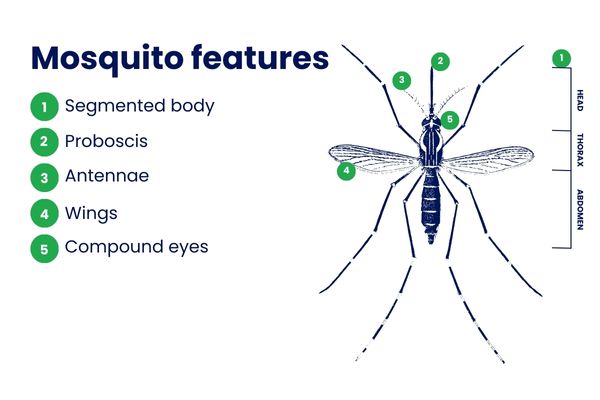
If you’re unsure of what a mosquito looks like, here are some key features to look out for:
- Humped appearance - Mosquitoes have a noticeable curvature that set them apart from many other flying insects.
- Segmented bodies - All mosquitoes have segmented bodies consisting of three main parts: the head, thorax, and abdomen.
- Proboscis - Adult mosquitoes possess several mouthparts, including needlelike stylets and a sheath called the proboscis, which they use for feeding on nectar or the blood of hosts.
- Antennae - Mosquitoes have two antennae on top of their heads, which serve as sensory organs to help detect various environmental cues.
- Wings - Mosquitoes have one pair of wings, which typically have distinctive scales that can be used to help identify mosquito species.
- Compound eyes - Mosquitoes have kidney-shaped compound eyes that help them navigate and find their hosts or mates.
- Legs - Mosquitoes have six long, slender legs covered in fine hairs, which serve various functions, such as walking on water, detecting environmental cues, and latching onto hosts.
Though there are many similarities between the different species of mosquitoes, there are also many ways in which they can vary. Here’s a few of the physical characteristics that can differ from species to species:
- Size - Adult mosquitoes can range from ⅛” to over ⅜ ”.
- Coloration - Mosquitoes can be brown, black, or grey in color.
- Markings - Certain species of mosquitoes have distinctive markings.
Mosquito bites
Biting is what these pesky insects are most well-known for. Some of the typical symptoms of a mosquito bite include:
- A small, raised, red bump on the skin.
- An itchy or uncomfortable feeling on or around the bitten area.
- A burning or stinging sensation immediately after being bitten.
- Intensified itchiness that can last several hours to a few days, depending on individual sensitivity to mosquito bites.
What are the different types of mosquitoes?
Although over 3,500 types of mosquitoes exist in the United States, the most common genera (a major taxonomic category—one of the ways we group species) include Culex, Aedes, and Anopheles. Many people are surprised to learn what a mosquito looks like up close, as the thousands of species each have distinctive features. Here are the most common species in the United States:
- Asian tiger mosquito (Aedes albopictus): This easily identifiable species originated in Southeast Asia and has since spread to warmer regions of the U.S. It is known for its distinctive black and white stripes.
- Southern house mosquito (Culex quinquefasciatus): This species is prevalent in residential areas and is commonly found in the southeastern United States. It often breeds in standing water.
- Northern house mosquito (Culex pipiens): Thriving in the northern regions of the U.S., the northern house mosquito is well adapted to cooler climates and often serves as a vector for various diseases.
- Yellow fever mosquito (Aedes aegypti): The yellow fever mosquito is primarily found in tropical and subtropical regions and is known for its role in transmitting diseases like yellow fever and dengue. Its adaptability allows it to thrive in urban environments.
- Gallinipper (Psorophora ciliate): The Gallinipper is recognized as the largest mosquito species, notable for its impressive size, which sets it apart from most other mosquito species.
Understanding these common species can help in effective mosquito identification and control measures.
What’s the difference between male vs. female mosquitoes?
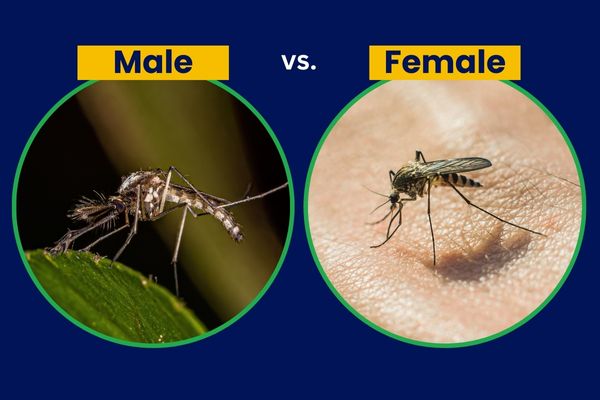
Male and female mosquitoes can be distinguished based on physical characteristics and behavior. For example—did you know that not all mosquitoes bite? Female mosquitoes are the only ones that bite because they need the nutrients from blood to reproduce.
Here’s some of the other major ways female mosquitoes differ from males:
- Size: Male mosquitoes tend to be smaller than their female counterparts.
- Slenderness: Female mosquitoes have a more slender needle-like mouthpart that is designed for biting.
- Antennae: Male mosquitoes have bushy, hairy antennae, while female mosquitoes have antennae that are a lot less hairy.
Which insects look like mosquitoes?
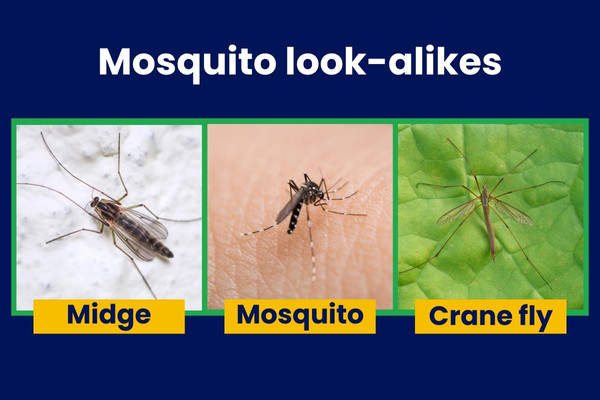
Mosquitoes are often mistaken for gnats, but midges and crane flies are insects that resemble mosquitoes more. It’s important to know what a mosquito looks like and how they act so that you can distinguish them from other flying insect look-alikes. The key to mosquito identification is looking at their physical characteristics and behavior.
Mosquitoes vs. midges
- Size and shape – Midges are smaller and have more slender bodies than mosquitoes.
- Mouthparts – Midges, unlike mosquitoes, do not have a proboscis (a small needle-like mouthpart used for feeding).
- Wing appearance – Mosquitoes have numerous scales over the veins of their wings, while midges’ wings are clear and translucent.
Mosquitoes vs. crane flies
- Size and shape – Crane flies can grow up to 1.5 inches in size, while mosquitoes only grow up to around half an inch.
- Mouthparts – Mosquitoes have a proboscis, a tubular appendage for sucking and feeding, while crane flies lack this mouthpart.
- Behavior – Crane flies are not known to bite humans or animals, while mosquitoes are infamous for doing so.
How can I fix my mosquito problem?
When it comes to serious mosquito problems, professional services are advised. A common misconception is that DIYs and home remedies are cheaper than hiring a professional mosquito control service—however, these methods may not be as cost-efficient as they seem because they are often ineffective. With 95+ years of experience at Terminix®, we understand mosquitoes and how challenging it can be to eliminate them.
Fortunately, Terminix® is dedicated to providing reliable and effective mosquito solutions with our expertise in mosquito identification and control. Our technicians will inspect your property and work with you to create a customized treatment to help keep mosquitoes away. Or, if you’ve got more than one pest problem, try our mosquito and tick control services for a more comprehensive solution to help protect your yard.