


Madagascar hissing cockroaches: care, behavior, and lifespan facts
Content updated: May 19th, 2026
Key takeaways
- The Madagascar hissing cockroach is a large, wingless insect known for its distinctive hissing sound, which it produces by expelling air through specialized breathing openings.
- Madagascar hissing cockroach behavior includes nocturnal activity and social colony living, with males using hissing and posturing to establish dominance.
- Madagascar hissing cockroaches typically live 2 to 5 years, depending on environmental conditions and care.
- These cockroaches live in warm, humid environments and feed on decaying plant matter, playing an important role in nutrient recycling.
- The Madagascar hissing cockroach is a popular exotic pet, known for being low-maintenance and easy to care for in simple enclosures.
Madagascar hissing cockroaches are large, wingless insects native to the tropical forests of Madagascar. These cockroaches thrive in warm, humid environments and are typically found on forest floors, where they feed on decaying plant material. Known for their distinctive hissing sound, Madagascar hissing cockroaches are often kept as exotic pets or used in educational settings.
Understanding Madagascar hissing cockroach behavior, how long they live, and what makes them unique can help you better recognize and care for this species.
What do Madagascar hissing cockroaches look like?
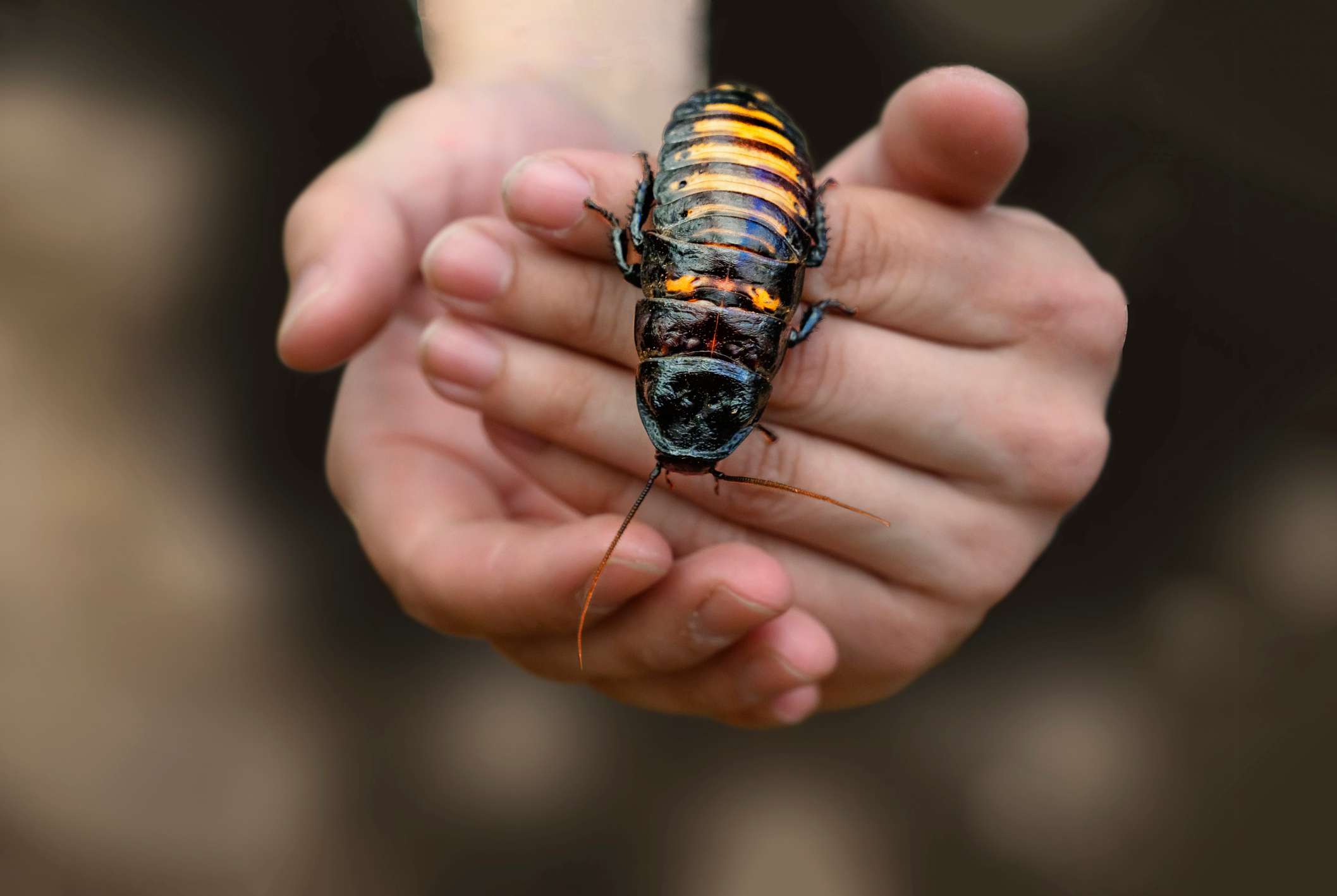
Madagascar hissing cockroaches are large, wingless insects measuring between two to four inches long and one inch wide. Their bodies are dark brown to black, with a shiny, slightly segmented appearance. They have long, thin antennae that help them navigate their environment and detect food sources.
One unique feature of these cockroaches is the presence of cerci—small, sensory appendages at the end of their abdomen, which they use to sense vibrations and changes in their surroundings. Additionally, their legs are lined with spines, giving them excellent grip on various surfaces.
Despite their size, Madagascar hissing cockroaches cannot fly, as they lack wings entirely. Their impressive size and distinctive features make them easily recognizable among other cockroach species.
Why do these cockroaches hiss?
Madagascar hissing cockroaches are famous for their distinctive hissing sound. Unlike other insects that create noise by rubbing body parts together or vibrating diaphragms, these cockroaches produce sound by forcefully expelling air through a pair of modified spiracles, small openings used for breathing. These spiracles, located along their thorax and abdomen, make Madagascar hissing cockroaches one of the few insects that use their respiratory system to create sound.
Four types of hisses have been identified, each serving a unique purpose:
Alarm hiss: A loud, snake-like hiss designed to startle predators.
Combat hiss: Produced by males to establish dominance and defend territories.
Courtship and mating hisses: Two distinct hisses used by males to attract females.
Male Madagascar hissing cockroaches do most of the hissing, particularly during territorial disputes. Males will stilt, standing tall on their "toes" to appear larger and more intimidating while emitting aggressive hisses to ward off rivals. Their pronotum, a plate-like structure covering their thorax, enhances their defensive posturing. Interestingly, fights between males rarely cause injury, as dominance is typically established through hissing and visual displays.
Females and nymphs are more social and less aggressive, hissing only occasionally. In rare instances, an entire colony may hiss in unison, creating a collective defense mechanism against potential threats.
Madagascar hissing cockroach behavior and feeding habits
Madagascar hissing cockroaches are primarily nocturnal and spend most of their time exploring, feeding, and hiding in dark, humid environments. In the wild, they are often found in colonies on the forest floor of Madagascar. Males are territorial, engaging in hissing and posturing to establish dominance, while females and nymphs are more social and less combative.
In the wild, Madagascar hissing cockroaches feed on decaying plant matter, fallen fruits, and other organic material, playing an essential role in recycling nutrients back into the ecosystem. Their diet consists of natural, readily available food sources, making them efficient decomposers in their habitat. In captivity, these cockroaches thrive on a varied diet that may include fruit, vegetables, grains, and dry pet food.
How long do Madagascar hissing cockroaches live?
Madagascar hissing cockroaches have a lifespan of approximately 2 to 5 years, depending on environmental conditions and care. Their life cycle consists of three main stages:
Egg stage: Unlike most cockroach species, Madagascar hissing cockroaches are ovoviviparous, meaning the female retains the eggs inside her body until they hatch. A single female can produce up to 60 nymphs per brood. The eggs develop within an egg case called an ootheca, which remains inside the female for about 60 days until the nymphs are ready to emerge.
Nymph stage: After hatching, nymphs are small, pale, and lack the darker coloration of adults. Over the course of several months, they go through six to ten molts, gradually developing their characteristic dark brown to black exoskeleton. Nymphs become adults after about five to seven months, depending on environmental factors like temperature and humidity.
Adult stage: Once fully grown, adult Madagascar hissing cockroaches are capable of reproduction. Males engage in territorial behaviors, such as hissing and posturing, to attract females and establish dominance. Females typically mate once but can store sperm to fertilize multiple broods over time. Adults can live for two to three years on average, with some living up to five years in optimal conditions.
Madagascar hissing cockroaches as pets
Madagascar hissing cockroaches are docile, low-maintenance, and safe, making them excellent exotic pets. They require minimal space and can thrive in enclosures like fish tanks or terrariums. Since they are skilled climbers, it’s important to test the enclosure and coat the top few inches of the glass with petroleum jelly to prevent escapes. These cockroaches prefer dark, hidden spaces, so adding hiding spots like small boxes or pieces of bark is essential. They can be fed fresh vegetables and protein-rich pellets, such as dry dog food, and water can be provided using a wet sponge.
In the United States, some states require permits to keep Madagascar hissing cockroaches as pets or in breeding colonies. These regulations help prevent their accidental introduction into the wild, though they are not considered invasive and do not infest structures in the U.S.
Beyond being kept as pets, Madagascar hissing cockroaches are used in research due to their unique behaviors, reproductive habits, and simple care requirements. They also serve an educational role in classrooms, helping students learn about insect anatomy and behavior. Additionally, they are sometimes used in television shows, movies, and even eating challenges, thanks to their distinctive appearance and fascinating hissing sound.