Content Updated: January 8, 2026
Key takeaways
- Centipedes are venomous, not poisonous, and may pinch, not bite, if threatened.
- Millipedes are not venomous but may release a defensive fluid to deter predators and other threats.
- Both pests enter homes for moisture and shelter, but centipedes may also follow prey indoors. Millipedes mainly wander inside accidentally.
- Moisture control and sealing entry points can help keep both pests out. For recurring issues, Terminix offers centipede and millipede control to address causes and prevent future invasions.
Jump to section:
Centipedes and millipedes are often confused due to their many legs and long, segmented bodies. However, when it comes to whether they’re poisonous or dangerous, there are many differences between them. In this guide, we’ll break down what makes centipedes and millipedes unique, explain which species are venomous (and which aren’t), and clarify common misconceptions.
Identifying centipedes vs. millipedes
Although centipedes and millipedes may look similar at first glance, several key features make it easy to tell them apart:
- Body
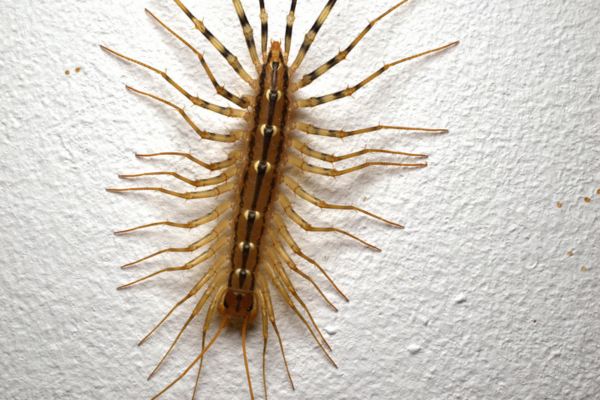
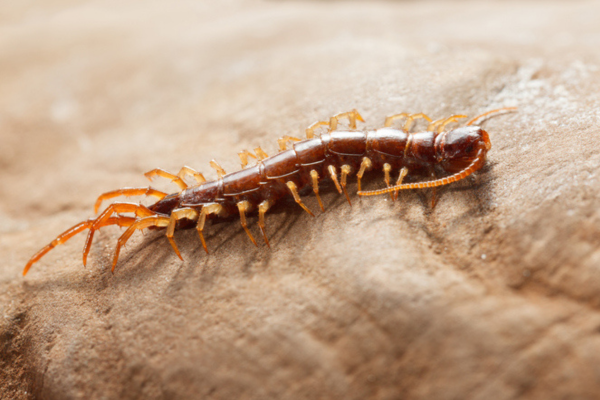
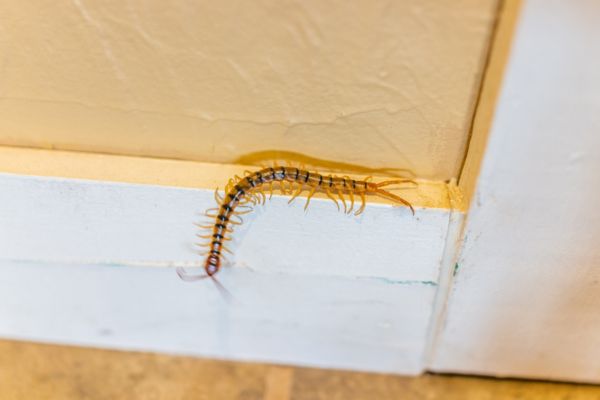
- Centipedes: Long, flat bodies that are usually more flexible and fast-moving.
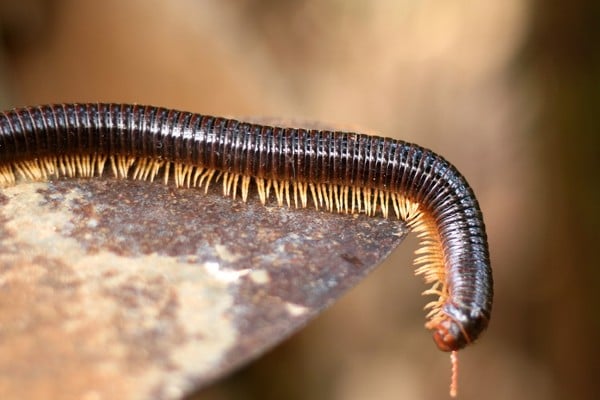
- Millipedes: Rounded, cylindrical bodies that look thicker and more rigid.
- Legs
- Centipedes: One pair of legs per body segment.
- Millipedes: Two pairs of legs per body segment.
- Coloring
- Centipedes: Often yellowish-brown, reddish, or dark brown, sometimes with noticeable striping.
- Millipedes: Typically dark brown, black, or reddish-brown, with a uniform color.
- Behavior
- Centipedes: Will run quickly and may act defensively; may pinch if threatened using their venomous front legs.
- Millipedes: Tend to curl into a tight coil as a defense mechanism and may secrete a foul-smelling liquid.
- Habitat
- Centipedes: Prefer damp, dark places but are active hunters that may chase prey
- Millipedes: Prefer moist environments with decaying organic matter. They are scavengers rather than predators.

House centipede
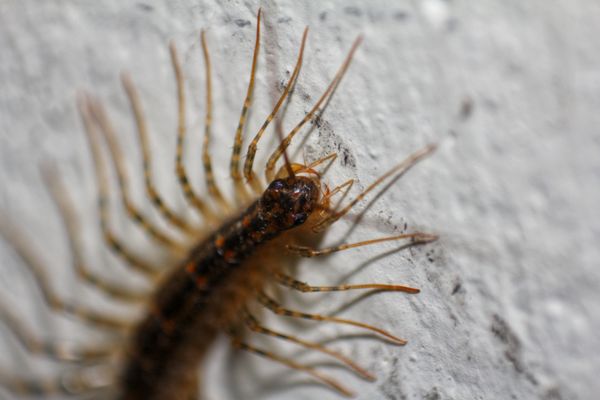
House millipede
Are centipedes poisonous?
Now, you’re probably wondering, “Are centipedes poisonous?” Centipedes are venomous, not poisonous. This means they inject venom through their modified front legs, called forcipules, to immobilize their prey.
Are centipedes poisonous to humans? While their venom is effective on insects and small animals, it’s not considered dangerous to humans. They generally avoid people and only pinch when threatened or handled.
Symptoms of a centipede bite
A centipede bite (more accurately, a pinch from their venomous legs) can cause:
- Sharp, localized pain
- Redness and swelling
- Warmth or tenderness at the bite site
In most cases, symptoms are mild and temporary, similar to a bee sting. Severe reactions are rare and typically occur only in people with allergies or sensitivity to insect venom. Most centipede bites can be treated at home using standard first aid. If symptoms worsen or persist, contact a healthcare provider.
Safety tips for centipede encounters
Coming across a centipede can be unsettling, but here are a few tips to handle the situation effectively:
- Stay calm and avoid touching it. Centipedes are fast and may react defensively if they feel threatened.
- Give it space. Most centipedes will retreat if left alone. Step back and allow it to move away.
- Do not try to pick it up with your hands. Even though many species aren’t dangerous, they can pinch if handled.
- Check for underlying issues. Seeing a centipede indoors can suggest there’s moisture, clutter, or other pests (their food source).
- Contact a professional if sightings occur frequently. Our centipede control professionals can help identify why centipedes are appearing and address the underlying causes.
Common types of centipedes
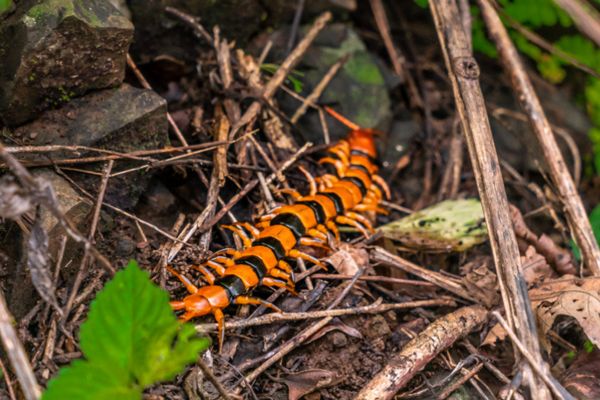
Homeowners may encounter various species of centipedes, depending on their location. While all centipedes have venom, the level of risk they pose varies. Here are a few of the most common types: