

Bee facts: behavior, pollination, and importance
Content Updated: June 8, 2026
Key takeaways
- An important bee fact is that they play a crucial role in pollinating plants, which is essential for food production and maintaining biodiversity.
- The decline in bee populations poses significant threats to ecosystems and agriculture, highlighting the need for conservation efforts.
- Honeybees communicate through a unique dance known as the "waggle dance," which conveys information about food sources.
- Certain bee species, such as solitary bees, are just as important for pollination as honeybees, stressing the importance of protecting all types of bees.
Jump to section:
Bee behavior: what do bees do all day?
Bees are essential pollinators and have been around for approximately 100 million years. They evolved from carnivorous wasps into over 20,000 diverse species and play a vital role in agriculture and ecosystems by co-evolving with flowering plants. Keep reading to learn interesting facts about bees and just how important they are for our ecosystem.
Bee behavior: What do bees do all day?
Worker honey bees are busy creatures, handling tasks like nursing, cleaning, foraging, and scouting as they age. In the early morning, forager bees start their day by leaving the hive in search of nectar and pollen. This is the most active time for workers, as the cooler temperatures make it easier for them to fly. By the afternoon, the hive is bustling with activity; worker bees are busy processing nectar into honey and tending to the larvae. Nighttime is mostly quiet, with the bees resting in the hive; however, some worker bees remain vigilant, guarding the entrance to keep intruders out.
How bees communicate
Bees communicate primarily through a method known as the "waggle dance." When a forager bee discovers a rich source of nectar or pollen, it returns to the hive and performs this intricate dance to convey important information to its fellow bees. This bee behavior consists of a series of movements in a figure-eight pattern, with specific waggling motions that indicate the direction and distance of the food source in relation to the sun. The angle of the dance tells other bees where to fly, while the duration of the waggle signals how far away the food is located.
Bee colony structure & roles
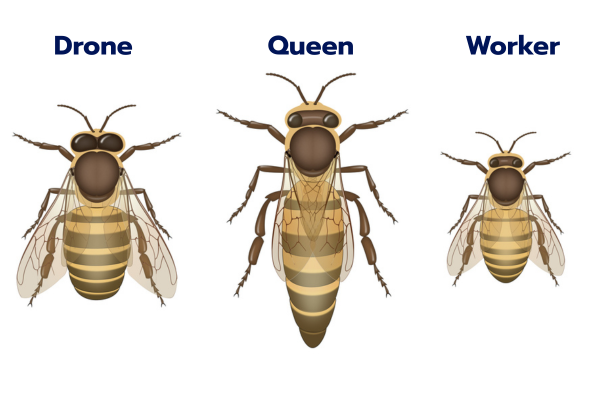
An interesting bee fact is that there are many varieties, each with a unique lifestyle. Solitary bees, like mason and leafcutter bees, build their nests and raise their young. Social bees, however, thrive in collaborative colonies where different members have specific roles within the beehive, including workers, drones, and the queen.
Queen
The queen bee is the reproductive center of the colony. The process of becoming a queen bee is often triggered by the old queen's decline or the need to swarm. Her primary role is to lay eggs, after having mated multiple times on a single mating flight. She releases pheromones that influence bee behavior and regulate the development of other bees in the colony. The queen is typically larger than other bees and can lay up to 2,000 eggs daily during the peak season.
Worker
A fun fact about bees is that worker bees are all female and do most of the foraging. They make up the majority of the colony and are responsible for various tasks within the colony. These tasks include nursing larvae, cleaning the hive, foraging for food, guarding the hive, and producing beeswax.
Drones
Drones are male bees whose primary purpose is to mate with a queen from another colony. They do not have stingers or other tasks like worker bees. An often unknown bee fact is that after mating, drones die, or they are expelled from the hive before winter to conserve resources.
Why bees are important
Bees play a crucial role in pollination, transferring pollen from the male parts of flowers to the female parts, allowing plants to produce seeds and fruit. An interesting bee fact is that they can visit around 2,000 flowers a day. They prefer colorful, fragrant plants such as lavender, sunflowers, and clover. By gathering food in this way, bees meet their needs and help grow the fruits and vegetables we rely on.
Another interesting bee fact is that about one-third of the food we consume is made possible by bee pollination. Many fruits, vegetables, and nuts, such as apples, almonds, blueberries, and cucumbers, depend on bee pollination to thrive. The plants that bees pollinate also provide habitat and food for a wide range of wildlife. Many birds, mammals, and other insects depend on these plants for their survival.
5 interesting bee facts
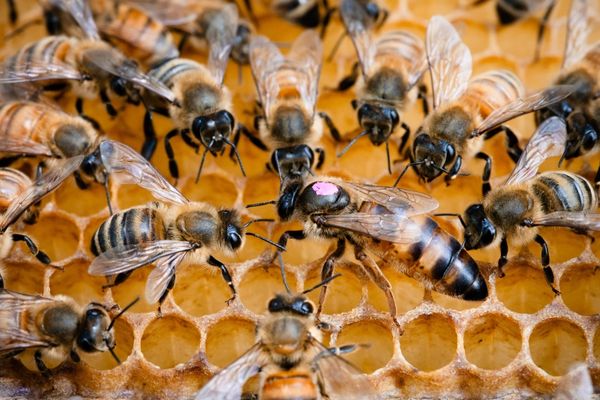
Bees are one of the most recognizable insects in the world. But you may not know some of these fun facts about bees.
Not all bees produce honey
Bees have short lifespans
Not all bees can sting
Bees can see colors
Bees are fast fliers
Honey production is unique to honey bees. They collect and process nectar into honey, storing it in wax honeycombs as their colony's food. Unlike honey bees, bumblebees and solitary bees have different lifestyles and do not produce honey on the same scale because of their varying food-storage behaviors.
The queen honey bee's lifespan is the longest compared to other bees, living up to five years, while worker bees usually make it only a few weeks to a couple of months. However, bees can face threats like pesticides, especially neonicotinoids, that harm their health and foraging. Habitat loss from urban sprawl and agriculture can reduce their food sources and nesting sites. On top of that, climate change disrupts the timing of flower blooms, making it harder for them to find food.
A key bee fact is that not all bees can sting; only female bees have stingers, while many species, especially males, lack this defense mechanism entirely. People often fear being stung by bees, but most are non-aggressive and will only sting when they feel threatened. When bees that cannot sting, or even those that can, feel distressed, they often show it through rapid buzzing, erratic movements, or attempts to escape. These tiny pollinators don't express affection in a human way, but bee behaviors like social grooming and food sharing serve a similar purpose.
Bees have a unique visual perception that allows them to see a spectrum of colors. This ability helps them locate flowers more easily, as many blooms have patterns visible only to bees. It is generally advised to avoid darker colors as dark hues may resemble the appearance of predators, prompting bees to become more aggressive. Light or bright colors, on the other hand, are less alarming and are less likely to provoke a defensive response.
Bees are fascinating creatures, especially when it comes to their flying abilities. Did you know that bees can fly at speeds up to 15 miles per hour? Their wings beat incredibly fast, around 200 times per second, enabling this impressive speed. Interestingly, bees don’t sleep in the traditional sense; instead, they enter a state of rest to recharge, which usually occurs at night.
No matter how interesting bees are, they can be hazardous to those with allergies. If you need to get rid of bees on your property, contact Terminix. Our technicians are experienced bee control experts and can recommend working with a beekeeper when needed. Whether you're weighing the costs of professional help or considering a hands-on approach with DIY solutions, explore our resources on bee control today.